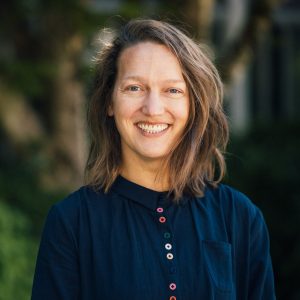
Tamara Mitchell (she/her), Assistant Professor of Hispanic Studies (FHIS)
Tamara Mitchell works at the intersection of politics and aesthetics in contemporary Latin American narrative fiction. She is presently working on a SSHRC-funded monograph entitled Sounds of the Capitalocene: Violence and Aurality in the Contemporary Latin American Novel, which analyzes literary aurality in recent fiction as a means of responding to and critiquing economic and ecological crises.
Tamara is founder of the Latin American Sound Studies Collective Bibliography. Prof. Amanda M. Smith (University of California, Santa Cruz) is Tamara’s collaborator in all-things-sonorous. Together they convene the Latin American Sound Studies Working Group (2020-present), are editing a special issue on Latin American Literary Aurality for the Revista de Estudios Hispánicos, and are organizing the Listening with the Ears: The Sounds of Latin American Literature Conference.
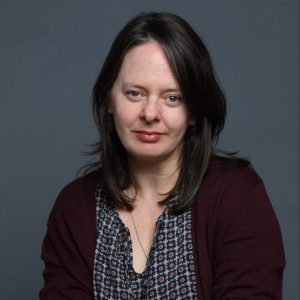
Jennifer Moss (she/her), School of Creative Writing
Jen Moss has worked in audio storytelling for over 20 years. She is the Co-founder and Chief Creative Officer of JAR Audio, a branded podcast company based in Vancouver, BC. She teaches Creative Writing for New Media and Creative Writing for Podcasting at UBC. She is interested in cross-genre and cross-departmental collaboration and in continually exploring how emerging technologies open new doorways for writers. Jen, who has a Master’s in Liberal Studies, has worked extensively in radio production for both CBC and Roundhouse Radio. She created dozens of audios documentaries for CBC Radio programs, such as Ideas, The Current, and North by Northwest. In addition, Jen was an interactive story producer on numerous award-winning interactive projects, including Bear 71 (NFB), Seven Digital Deadly Sins (The Guardian), Hyperlocal (CBC), Life on Hold (Al Jazeera), and The Last Hunt (NFB).

Alex Fisher (he/him), Professor, School of Music
Alex Fisher is a Professor of Music at the UBC School of Music. A specialist in music, sound, and religious culture in early modern Germany, he is the author of Music and Religious Identity in Counter-Reformation Augsburg, 1580-1630 (Ashgate, 2004), and Music, Piety, and Propaganda: The Soundscapes of Counter-Reformation Bavaria (Oxford, 2014). His work appears in various journals, including the Journal of Musicology, Journal of the Royal Musical Association, Early Music History, the Journal for Seventeenth-Century Music, and Sixteenth Century Journal (forthcoming). His current research on soundscapes and confessional space in the Holy Roman Empire in the post-Reformation era is supported by the Social Sciences and Humanities Research Council of Canada.
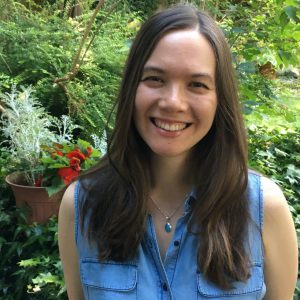
Rosanne Sia (she/her), Assistant Professor, Institute for Gender, Race, Sexuality, and Social Justice
Rosanne Sia works across Cold War cultural history, performance studies, critical race studies, and queer studies. Her book manuscript project focuses on women of Asian and Latinx descent who danced and sang on nightclub circuits in the early Cold War.
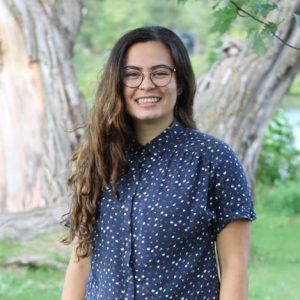
Pamela Zamora (she/her), PhD Student, Hispanic Studies; GRA, Sound and the Humanities Research Cluster
Pamela Zamora’s work examines contemporary Mexican and Central American literature. She is interested in how novels enact and portray literary listening to social crises in the region. Her dissertation project dwells on the unmet promises of the state to protect its citizens, silencing traditionally underrepresented groups (e.g., Indigenous communities, migrants, and women). She is currently working as a Graduate Research Assistant for the Sound and the Humanities Research Cluster. Her article on Salvadorian fiction and sonic violence in neoliberal times has been accepted to the Revista de Estudios Hispánicos special issue on Latin American Literary Aurality.
Pamela Zamora (she/her), PhD Student, Hispanic Studies; GRA, Sound and the Humanities Research Cluster
Pamela Zamora’s work examines contemporary Mexican and Central American literature. She is interested in how novels enact and portray literary listening to social crises in the region. Her dissertation project dwells on the unmet promises of the state to protect its citizens, silencing traditionally underrepresented groups (e.g., Indigenous communities, migrants, and women). She is currently working as a Graduate Research Assistant for the Sound and the Humanities Research Cluster. Her article on Salvadorian fiction and sonic violence in neoliberal times has been accepted to the Revista de Estudios Hispánicos special issue on Latin American Literary Aurality.